|
|

|
|
|
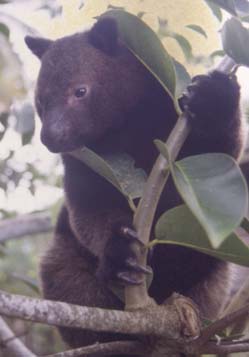
Animal Info - Tenkile(Other Name: Scott's Tree Kangaroo, Tenkile Tree Kangaroo)Dendrolagus scottaeStatus: EndangeredContents1. Profile (Picture) ProfilePicture: Tenkile (12 Kb JPEG) (Tenkile Cons. All.) The tenkile is a marsupial that weighs
about 10 kg (22 lb). It is found in mossy mountain forests from 900 - 1500 m (3000 -
5000'). The diet of the tenkile includes tree leaves, ferns, and soft vines.
This tree kangaroo is diurnal and mainly terrestrial. It probably breeds throughout the year,
with females giving birth at 12 month intervals. In the past, family groups of up to 4
individuals were seen. However, most recent sightings have been of solitary individuals or
a female and young pair. Tidbits*** The tenkile has a powerful odor which persists for up to a week on the
hands of someone who has picked up one of the animals. Status and TrendsIUCN Status:
Countries Where the Tenkile Is Currently Found:2004: Occurs in Papua New Guinea (IUCN 2004). History of Distribution:The tenkile was apparently more common and widespread in the past. It is currently found in Sandaun Province in northwestern Papua New Guinea, in three locations along the summits of the Torricelli Mountains in the region between Yonkeitei and Wigotei Villages in the Fatima area. Its total habitat area probably does not exceed 50 sq km (19 sq mi). (Flannery 1995) Distribution Map (24 Kb JPEG) (Tenkile Cons. All.) Threats and Reasons for Decline:Hunting is the main threat to the tenkile. Data on Biology and EcologyWeight:
Habitat:
Birth Season:
Birth Rate:
Diet:
Behavior:
Social Organization:
ReferencesFlannery 1995, IUCN 1994, IUCN 1996, IUCN 2000, IUCN 2003a, IUCN 2004, Kennedy 1992, Tenkile Cons. All. Top of Page | Search This Site Home | Rarest Mammals | Species Index | Species Groups Index | Country Index | Links Last modified: May 31, 2005; |
|
© 1999 - 2019
Animal
Info. Endangered animals of the
world.
Contact Us.. |