|
|

|
|
|
Animal Info - Omilteme Rabbit(Other Name: Conejo de Omilteme, Omilteme Cottontail, Omiltemi Rabbit)Sylvilagus insonusStatus: Critically EndangeredContents1. Profile ProfileThe Omiltemi rabbit, or cottontail, is found in pine and pine-oak forests between 2300
m and 5280 m (7540 - 17,300'). Cottontails are terrestrial.
They protect themselves by remaining motionless for as long as 15 minutes when closely
approached. Tidbits*** Very little is known about the Omiltemi rabbit's biology and ecology. *** Rabbits (belonging to many different genera) vs. Hares (all in the genus Lepus): The major differences between rabbits and hares include: 1.) their methods in avoiding predators (rabbits hide in dense vegetation or burrows; hares have longer legs and try to outrun predators), and 2.) the characteristics of their young at birth (newborn rabbits ("kittens") are born naked and with their eyes closed; newborn hares ("leverets") are better developed - their eyes are open and they can move around with some degree of coordination) (Macdonald 2001). Status and TrendsIUCN Status:Countries Where the Omiltemi Rabbit Is Currently Found:2004: Occurs in Mexico (may be extinct) (IUCN 2004). History of Distribution:
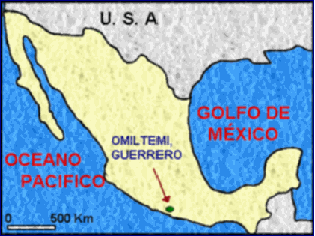
The Omiltemi rabbit occurs only in the Sierra Madre del Sur, in the vicinity of Omiltemi, Guerrero, Mexico. Its known range is less than 500 sq km (190 sq
mi). Threats and Reasons for Decline:Habitat loss (especially due to logging and cattle grazing) and hunting likely are major threats. Data on Biology and EcologyHabitat:
Behavior:
ReferencesAMCELA, Caughley & Gunn 1996, Chapman & Flux 1990, Cons. Intl., InfoNatura, IUCN 1994, IUCN 1996, IUCN 2000, IUCN 2003a, IUCN 2004, Macdonald 1984, Macdonald 2001, Nowak 1999, Nowak & Paradiso 1983 Top of Page | Search This Site Home | Rarest Mammals | Species Index | Species Groups Index | Country Index | Links Last modified: January 2, 2005; |
|
© 1999 - 2019
Animal
Info. Endangered animals of the
world.
Contact Us.. |